
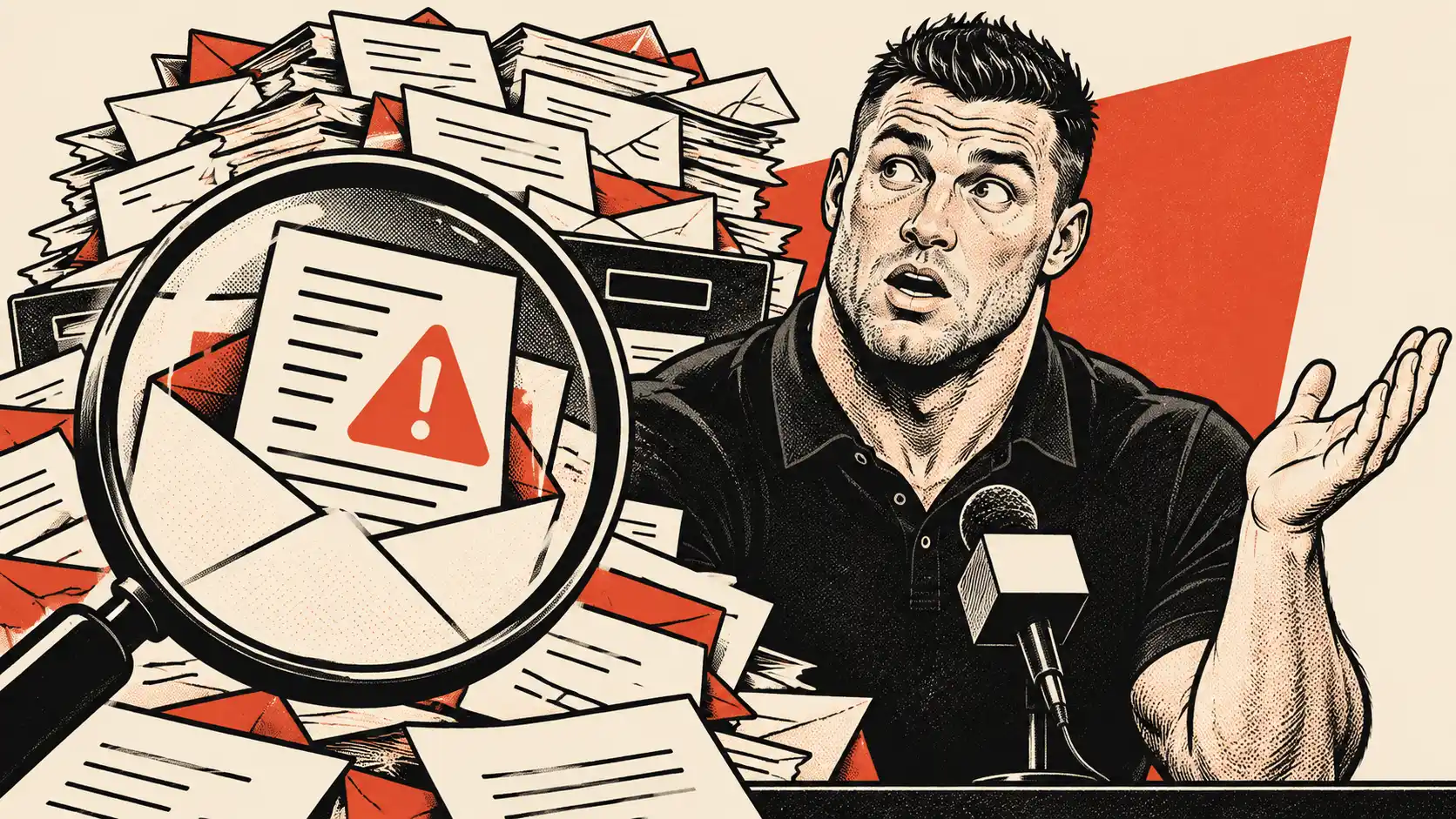
Tim Tebow’s explanation for the Life Surge controversy has a problem that a concerned expression cannot fix: the warning arrived long before the public retreat.
According to The Roys Report, his team received detailed questions about alleged financial harm on July 29, 2025. In September 2026, Tebow said he was “caught off guard with some of it.”
That gap deserves an explanation. A saintly shrug will not do.
The reply matters. So does what happened next.
In its September 29 podcast, The Roys Report walked through reporter Ann Marie Shambaugh’s correspondence. Her Instagram message described complaints that celebrity speakers attracted attendees who then faced pressure to purchase financial programs, sometimes with damaging consequences.
A member of Tebow’s social team replied and directed her to his publicists. Shambaugh says she emailed the questions and received no substantive answer. She also says Life Surge’s PR team later told her that Tebow’s team had alerted it to her inquiry.
The reply acknowledged the inquiry; it did not answer the allegations. But the reported communication with Life Surge makes this considerably harder to dismiss as an unnoticed message.
Those records establish notice to his representatives. They do not establish when Tebow personally read the questions. If his team failed to inform him, that failure needs explaining too. An unanswered warning should never become an invisible warning simply because the famous person has people handling his inbox.
Pausing the relationship leaves the central question open
WRUF reported that Tebow announced a pause while his team investigated. He described the allegations as extremely serious and said he wanted to understand the facts.
Good. Now put dates beside that concern.
A meaningful review should explain what was checked before his appearances, what warnings reached the people managing those appearances, and what changed when the September investigation landed. The public deserves enough detail to distinguish a genuine investigation from a reputation-management exercise with a solemn voice.
A pause stops future appearances. It does not account for past decisions. Nor should the audience have to award a medal for the sudden discovery that a business partnership deserves scrutiny.
The customers’ losses deserve more attention than his discomfort
The Roys Report’s October 2025 investigation described customers who said they had depleted retirement savings or borrowed heavily for programs they regretted buying. Don Speer said he withdrew more than $60,000 from his 401(k) to fund training. The reporting also included satisfied customers and the company’s defense.
Those differing experiences deserve honest treatment. A success story does not erase a complaint about how somebody else was sold an expensive program.
For a customer, the consequences can outlast the event by years. The music stops. The celebrity leaves. The payment obligation stays.
That is why the question of advance warning matters. A promoter’s damaged reputation may eventually recover. Rebuilding retirement savings is a much uglier assignment, and the customer cannot fix it by issuing a statement about being deeply concerned.
A famous face helps sell the room
Religion News Service reported a progression from inexpensive event tickets to $97 classes and then training priced at $10,000 to $40,000. It also described a 2023 recording in which Tebow encouraged people who had signed up for classes to follow through.
That encouragement matters. Audiences can reasonably hear a trusted headliner’s enthusiasm as reassurance about the business surrounding him.
Celebrity credibility has commercial value precisely because people bring their existing trust into the room. The obligation to investigate should grow with that influence. A famous speaker should ask what happens to attendees after the applause, what they are offered, and how much they may be asked to spend.
A halo is a terrible substitute for due diligence. It is an even worse customer-protection policy.
Life Surge’s defense does not settle the warning question
In its September 25 statement, Life Surge disputed the reporting’s characterization, pointed to satisfied students and compliance safeguards, and defended Tebow’s character and charitable work. It said it respected his decision to pause the relationship.
Those are the company’s positions. They should be included, and they should be examined.
But praise for Tebow’s service elsewhere cannot answer a specific question about this partnership. Good deeds do not function as transferable credit against scrutiny. Nobody should have to argue against someone’s charitable work before asking why their representatives received a serious warning and what happened afterward.
Dragging his entire moral résumé into the discussion makes the question sound unfair. The question is perfectly fair.
Publish the timeline, Tim
Tebow can make this much less mysterious. He should say when he first learned of the complaints, explain how his representatives handled the earlier inquiry, and publish the findings of the review he announced.
He should also explain what he now believes he owed the people who trusted his involvement, and whether he intends to help customers who say that trust contributed to decisions they regret.
These are reasonable demands of a public promoter. The standard should be especially clear for anyone who makes moral leadership part of his public identity.
Concern needs a timeline. Accountability needs answers. Until those arrive, the surprised expression deserves considerably less respect than the unanswered questions.