There’s a dangerous kind of corporate brilliance: the ability to make next quarter’s numbers look wonderful while quietly setting fire to the next five years.
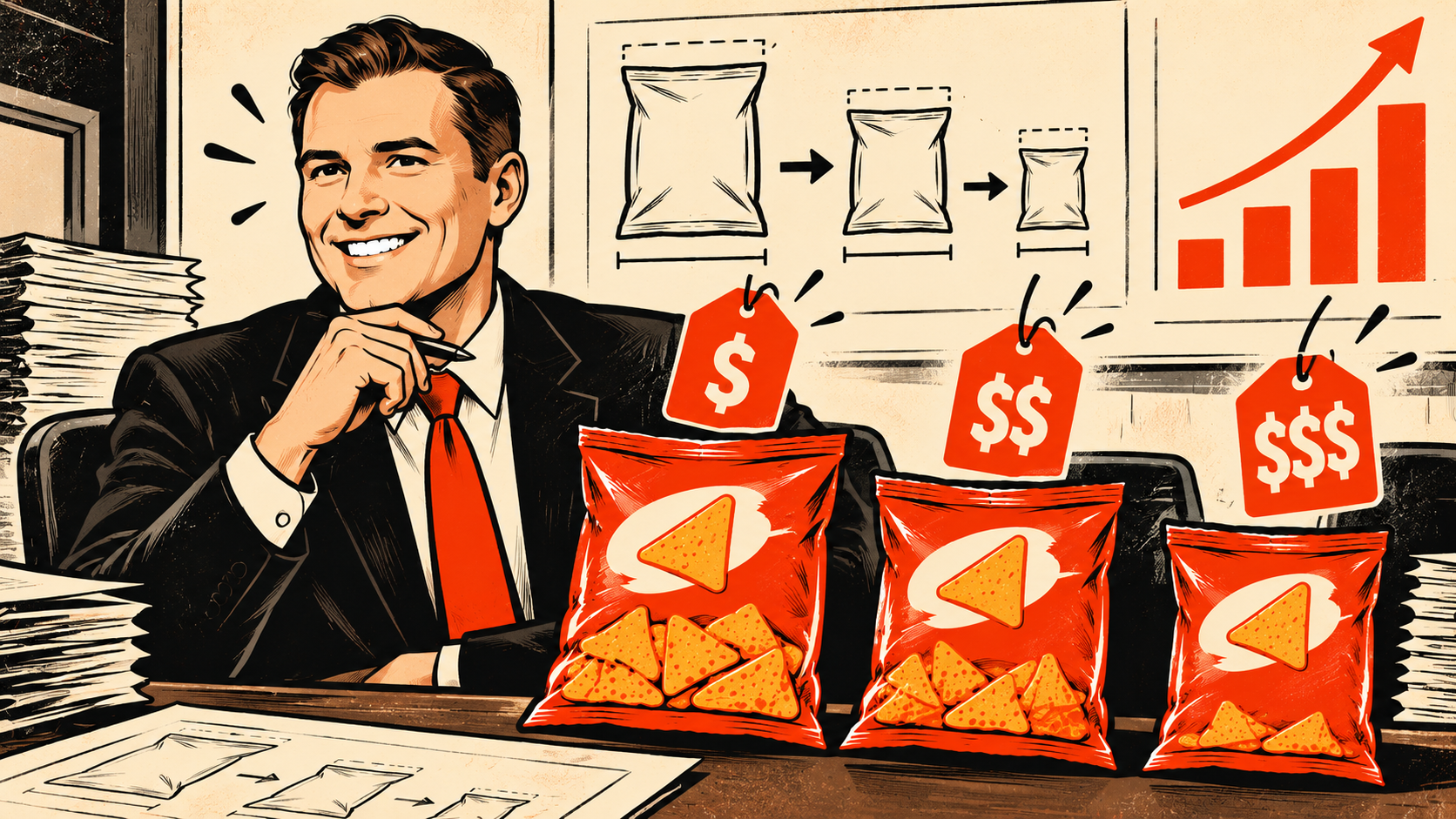
At Frito-Lay, that brilliance had a respectable-sounding name: Price Pack Architecture, or PPA. It involved deciding what went in a bag, how much the bag cost, which packages retailers received, and how promotions could extract more revenue. Consumers saw more expensive chips and shrinking portions. Finance could see another successful pricing initiative.
According to Frito-Lay marketing employees interviewed by RippedMeOff about practices between 2016 and 2026, Eric Otto was a central figure in developing and advancing the company’s aggressive approach to PPA. Those employees describe a strategy pursued despite objections from people responsible for protecting the long-term health of the brands.
The public record independently confirms Otto’s revenue-management leadership roles and the later financial deterioration. It does not identify his personal approval of individual package changes or the price increases enacted after he left Frito-Lay revenue management.
Eric Otto’s Role in Frito-Lay Revenue Management
Publicly available career histories place Otto as Director of Revenue Management Strategy from October 2016 to March 2018, followed by Senior Director of Revenue Management until July 2019. He subsequently became CFO of Walkers Snack Foods, held senior European finance positions, and moved into corporate strategy and transformation finance leadership.
The insiders interviewed by RippedMeOff place Otto at the center of building and promoting the pricing approach used by Frito-Lay during that period. They describe staggered “price up, weight out” initiatives: planned increases in shelf prices, reductions in package weight, and changes to pack configurations across successive years.
Price Pack Architecture itself was not exclusively Otto’s invention. It was already part of PepsiCo’s playbook. At a September 2016 investor conference, Frito-Lay president Vivek Sankaran openly discussed getting additional price realization from products containing fewer ounces at the same price point. However, Otto was behind the aggressive implementation, starting with single serve packs, and then moving onto the portfolio more broadly.
The issue is how aggressively Frito-Lay used it and how it judged success.
The Spreadsheet Can Win While the Brand Loses
Here’s how the trap works. Imagine a snack brand sells 100 bags at $4 each, bringing in $400. Raise the price to $5, lose ten sales, and revenue still rises to $450. Sales volume falls 10%, but revenue increases 12.5%.
This is hypothetical, but it explains why finance can celebrate while brand managers worry.
Add smaller packages, promotions, and different pack sizes. A model can forecast attractive returns across retailers while missing years of accumulated damage to brand loyalty.
The lost sale isn’t necessarily temporary. A shopper who discovers that a cheaper brand tastes fine may never resume buying Doritos every week. Winning back that consumer can require discounts, advertising, retailer incentives, and sustained effort.
The mathematical problem isn’t that the early revenue gains were imaginary. It’s that the model may have counted those gains without adequately charging the strategy for the customers it would eventually lose.
Employees Say the Brand-Equity Warnings Were There
Marketing employees interviewed by RippedMeOff describe direct internal disagreement over the long-term wisdom of Frito-Lay’s PPA approach. Their concern wasn’t that finance should never raise prices. It was that the company was repeatedly extracting value from customer relationships that brand teams had spent decades building.
Insiders say Roney was pushed out of revenue management as Otto took over the function. Public career histories show a change in responsibilities around the same period, but they don’t establish the internal reasons for that decision. The personnel conflict merits a separate investigation.
Here, the central issue is bigger than office politics. What happens when the executive who delivers next year’s pricing gains is rewarded, while the people warning about damage three or five years later have little influence over the decision?
That’s an incentive system practically begging for short-term thinking. The model doesn’t have to be fraudulent to be destructive. It only has to be rewarded for the wrong definition of success.
The Pricing Results Looked Impressive. Then Volume Turned.
In 2022, Frito-Lay North America’s organic revenue increased 17%, essentially all from effective net pricing, with no organic volume contribution. In 2023, effective net pricing added another 10 percentage points, while organic volume contributed approximately negative one point.
Input costs were genuinely rising, but revenue could climb even as demand softened.
By 2024, Frito-Lay unit volume was down 2.5%, revenue had declined approximately 1%, and operating profit had fallen approximately 7%.
Walmart eventually told PepsiCo its snack prices were too high, repeatedly. Bloomberg’s April 2026 investigation reported that the retailer reduced Frito-Lay shelf space in favor of cheaper options. It documented Doritos prices rising nearly 50% at Walmart since 2021, with some Frito-Lay bags exceeding $7.
Otto had left the Frito-Lay revenue-management post in 2019. The subsequent price increases, and the decision to resist reversing them, belonged to successive business and corporate leaders. Building a pricing system is one level of responsibility. Continuing to turn the dial after consumers start walking away is another.
PepsiCo Is Now Using PPA to Advertise Affordability
There is an almost perfect corporate irony in PepsiCo’s response.
In its 2026 proxy statement, PepsiCo said it continued using revenue management and Price Pack Architecture to provide consumers more value through promotions, accessible package prices, and portion choices. In February 2026, it announced suggested retail price cuts of up to nearly 15% on selected Lay’s, Doritos, Cheetos, and Tostitos products.
After years of pushing prices upward, the company was now touting the virtues of making chips affordable. Apparently the spreadsheet had discovered shoppers could say no.
The recovery remains expensive. In the third quarter of 2026, the broader PepsiCo Foods North America segment reported a 12% decline in core constant-currency operating profit. That segment also includes Quaker, and other costs affected earnings, so the decline is not a clean measure of PPA’s damage. But the company’s renewed spending on affordability and brand support makes the economic reversal impossible to ignore.
Otto now holds a senior corporate finance role associated with strategy and transformation. Public disclosures do not establish that he personally directs the current snack-pricing reset. What they do establish is that the company is trying to repair consumer value after years in which pricing was a major growth engine.
The People Who Built the Math Should Answer for the Full Equation
Eric Otto should not be blamed for every problem at PepsiCo, particularly its separate beverage business. Nor should the entire Frito-Lay pricing episode be dumped on one finance executive while the CEOs and business leaders who approved and extended the strategy escape scrutiny.
But the executives who designed, sponsored, and rewarded aggressive PPA deserve direct questions: How were long-term household loyalty and competitive switching modeled? What weight did brand-finance objections carry? Were the original financial gains ever compared against the cost of price reductions, renewed advertising, lost retail space, and customer reacquisition?
That is the difference between creating value and borrowing it from the future.
Frito-Lay’s pricing machine was excellent at finding how much customers would pay. PepsiCo’s expensive lesson is that it also needed to care how long those customers would keep paying.
Eric Otto and Frito-Lay Price Pack Architecture FAQs
What role did Eric Otto have in Frito-Lay pricing?
Public professional histories identify Otto as Director of Revenue Management Strategy beginning in 2016 and Senior Director of Revenue Management from 2018 to 2019. Frito-Lay marketing employees interviewed by RippedMeOff describe him as central to the company’s aggressive PPA approach.
Did Eric Otto invent Price Pack Architecture?
No. Price Pack Architecture predates his Frito-Lay revenue-management leadership. The reporting concerns his role in developing and advancing an aggressive application of it, not inventing the entire revenue-management discipline.
Did Otto approve the pandemic-era Doritos price hikes?
Public records do not establish that. He left the Frito-Lay revenue-management role in 2019. Decisions to continue and accelerate pricing during the pandemic involved the executives running the business and PepsiCo afterward.
Why is PepsiCo reducing snack prices now?
PepsiCo says it wants to improve affordability and increase purchase frequency. The reversal followed weaker demand, retailer resistance, and pressure to improve North American foods performance.
References
- PepsiCo / Thomson Reuters, Barclays Global Consumer Staples Conference, September 7, 2016
- Eric Otto, public professional role history
- PepsiCo 2022 Form 10-K
- PepsiCo 2023 Form 10-K
- PepsiCo 2024 Form 10-K
- Bloomberg investigation, republished by the Los Angeles Times, April 7, 2026
- PepsiCo 2026 proxy statement
- PepsiCo, February 3, 2026: Snack price reductions
- PepsiCo Q3 2026 earnings release