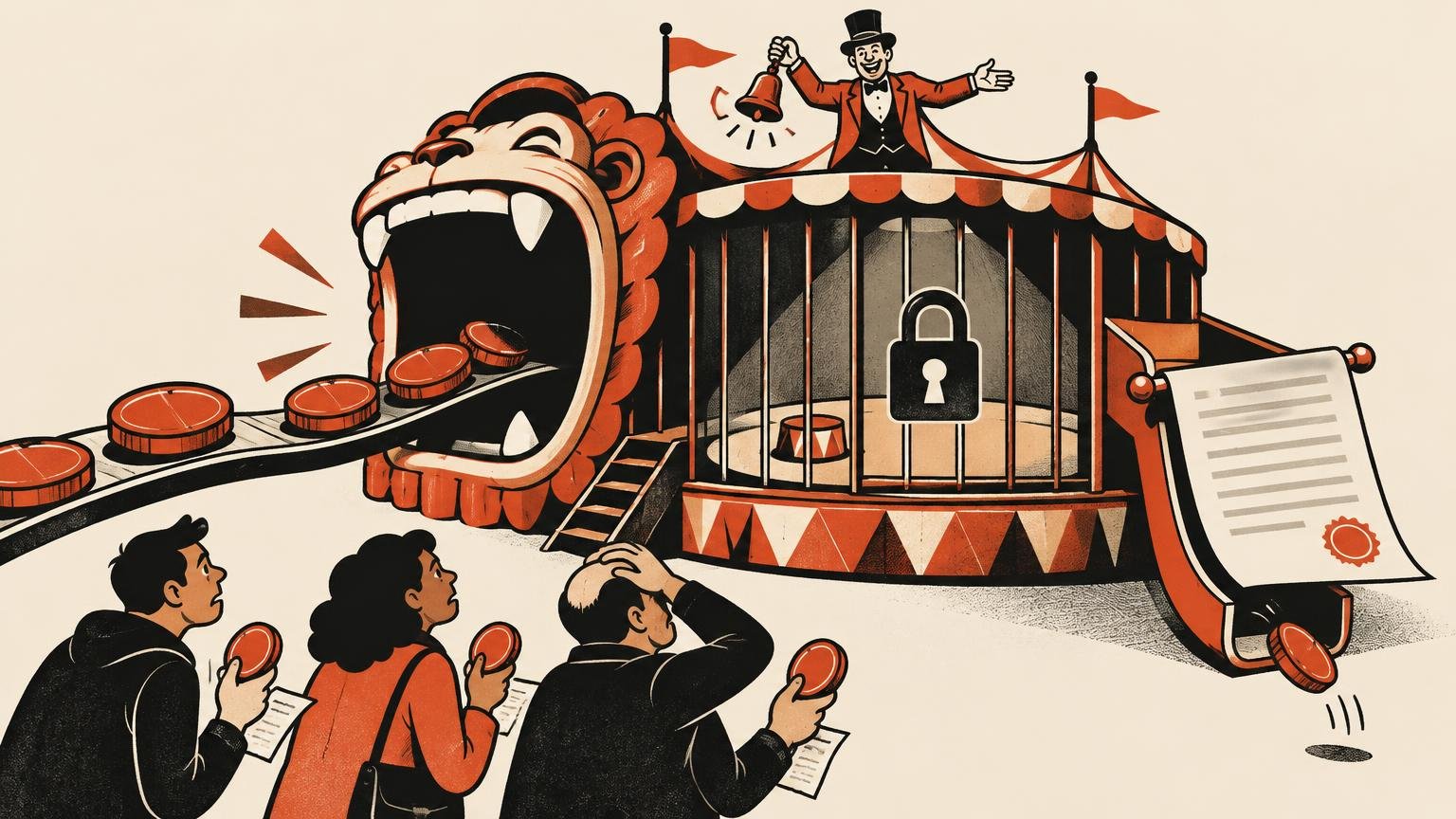
CryptoZoo was sold with the kind of pitch that should make every consumer clutch their wallet with both hands: collectible cartoon animals, cryptocurrency rewards, limited digital assets and a celebrity assuring his enormous audience that the whole contraption would be fun and profitable. Logan Paul called it “a really fun game that makes you money.” The money from buyers was real. The promised game was not.
What followed was not a clean refund for everyone who bought into the ecosystem. It was an undelivered game, a collapsing speculative project, contradictory promises and, eventually, a narrow buyback for selected NFT holders. That buyback excluded $ZOO-token holders and hybrid-NFT owners and required participants to surrender CryptoZoo-related legal claims against Paul. Apparently, even the refund needed its own trapdoor.
CryptoZoo sold a game, an investment fantasy and Logan Paul’s credibility
CryptoZoo’s published materials described an NFT ecosystem in which buyers could purchase Base Eggs, hatch them into animals, breed hybrids, trade assets and earn the project’s $ZOO token through NFT yield. Paul promoted both the gameplay and its earning potential through his podcast and other public appearances. He even told Forbes that a child’s first encounter with blockchain could occur through CryptoZoo.
The celebrity sales engine worked. The initial 10,000 Base Eggs sold out within minutes on September 3, 2021. Paul also described the project as potentially more universal than Pokémon, according to TIME’s investigation of CryptoZoo. That was an astonishing comparison for a project that would ultimately fail to release its advertised game. Pokémon, inconveniently for this boast, exists.
Buyers were not merely offered a static piece of digital artwork. The eggs and tokens were components of a promised economic loop: hatch, breed, earn and trade. Scarcity encouraged urgency, yield supplied the money-making lure, and Paul’s celebrity supplied trust. This is how speculative promotion becomes especially dangerous. The promoter’s familiarity can make an unproven product feel safer without changing anything about its actual readiness.
Buyers received assets for a game that never arrived
Some purchasers received Base Egg NFTs, Base Animal NFTs or $ZOO tokens. What they did not receive was the completed CryptoZoo game around which those assets had been marketed. Without that game, the elaborate ecosystem became a collection of speculative digital items stripped of their central advertised purpose. A token does not become a functioning product merely because it sits obediently in a wallet.
Paul’s later account sharply reduced his own role. He told TIME that his involvement had been “super minimal” and blamed bad actors. In later litigation, he alleged that developers Eduardo Ibanez and Jake Greenbaum deceived him and sabotaged the venture. Those accusations were Paul’s allegations, not judicial findings.
But “super minimal” is a shabby umbrella when the rain arrives. Paul directly marketed CryptoZoo’s gameplay and earning potential to his audience. He was not an obscure passerby who accidentally wandered into the launch photo. A promoter cannot sensibly lend his name, reach and enthusiasm to a speculative product, then shrink into decorative wallpaper when customers ask where the product went.
Celebrity promotion does not prove that the celebrity built the software or controlled every participant. It does establish responsibility for the promises the celebrity personally broadcast. Consumers weighing another famous promoter’s reassuring sales pitch should remember that fame is not due diligence. The credibility problem is familiar: a celebrity’s public explanation must still survive the documentary record.
The promise to finish the game quietly became a promise not to
On January 13, 2023, Paul announced a three-part response. He said he and his manager, Jeffrey Levin, would burn their $ZOO tokens, that a rewards program would be created for disappointed Base Egg and Base Animal holders, and that the game would be completed. That last commitment mattered because it addressed the product customers had actually been promised.
One year later, the completion pledge was dead. On January 4, 2024, Paul said the game would not be released, attributing the decision to regulatory hurdles. In its place came a limited NFT buyback. The difference is not cosmetic. “We will finish the game” and “the game will never be released, but some people can sell certain NFTs back under restrictive terms” are not two versions of the same result. One is delivery. The other is cleanup with a clipboard and a waiver.
The CryptoZoo buyback was not a general refund
The claim window ran from January 4 through February 8, 2024. Qualifying Base Eggs and Base Animals were eligible for 0.1 ETH each. Hybrid Animals and $ZOO tokens were excluded. Paul framed the program as being for people who intended to play CryptoZoo rather than those who had gambled on the cryptocurrency market.
That distinction conveniently placed the project in charge of deciding which disappointed customers deserved relief. CryptoZoo had marketed an ecosystem combining gameplay, tradable tokens, scarce NFTs and earning potential. After those elements helped attract buyers, the buyback attempted to separate “players” from “gamblers” as though the speculative machinery had wandered into the pitch without an invitation.
The terms were even less generous than the word “buyback” suggests. Participants had to waive actual or anticipated CryptoZoo-related claims against Paul. Reporting also said NFTs Paul deemed ineligible in his sole discretion would not be returned. TechCrunch’s account of the buyback terms described the central bargain plainly: accept the limited payment and give up the right to sue him over CryptoZoo.
Whatever amount was paid, the structure remains the scandal. This was not universal restitution for CryptoZoo losses. It was a closed program covering selected base NFTs, excluding other parts of the ecosystem and extracting releases from participating customers. Purchaser-side attorney Tom Kherkher criticized the waiver requirement, although that criticism was advocacy rather than a court finding. Calling this a full refund would be like calling one dry corner of a flooded house a successful plumbing repair.
The buyer lawsuit did not end with the first dismissal order
CryptoZoo purchasers filed a proposed federal class action in the Western District of Texas on February 2, 2023. The defendants included CryptoZoo, Paul, Levin, Ibanez, Greenbaum, Danielle Strobel/Jonas and Ophir Bentov. The complaint alleged misleading promotion, failure to deliver a functional game, market manipulation and violations under an array of fraud, consumer-protection, contract, negligence, securities, commodities and RICO theories. These were allegations, not adjudicated findings.
On October 29, 2025, Judge Alan D. Albright dismissed all 27 claims in the operative complaint. Counts 1 through 26 were dismissed with leave to amend, while Count 27 was dismissed with prejudice. The order therefore did not amount to a final merits ruling clearing every defendant of the purchasers’ allegations. The federal court’s dismissal order expressly allowed most claims to be repleaded.
The purchasers filed a Second Amended Complaint, and Paul moved to dismiss it on January 30, 2026. As of the latest accessible case-status reporting dated July 13, 2026, that motion was fully briefed and awaiting a ruling. No class had been certified, and the litigation had not produced a settlement, damages award or public claim fund.
Paul’s case against Coffeezilla was a separate dispute
Paul also sued Stephen Findeisen, known online as Coffeezilla, and Coffee Break Productions for defamation in June 2024 over Findeisen’s CryptoZoo coverage and later statements. That case was not the purchasers’ lawsuit, did not seek compensation for CryptoZoo buyers and could not determine whether those purchasers were entitled to damages.
Available reporting indicates that the Paul–Findeisen dispute ended in July 2026 through a resolution or dismissal without a public trial verdict deciding which side’s overall account of CryptoZoo was correct. Conflating that dispute with the purchaser litigation would turn two different cases into one legal smoothie and produce conclusions neither proceeding established.
The real warning is about borrowed trust
CryptoZoo shows why consumers should treat celebrity confidence as advertising, not evidence. Paul used his reach to promote a game with earning potential, the eggs sold out rapidly, and the finished game never appeared. He then promised to complete it before announcing that it would not be released. The eventual buyback covered only selected assets and demanded that participants waive claims against him.
The pending buyer litigation may determine whether amended legal claims survive, but consumers do not need a final liability judgment to compare the pitch with the delivery. The pitch offered a fun, potentially expansive game that could make money. The outcome was an undelivered game, stranded pieces of a speculative ecosystem and a refund program with exclusions large enough to park the missing zoo inside.
Celebrity credibility is valuable precisely because audiences may trust it faster than they would trust an unknown promoter. That makes the responsibility greater, not “super minimal.” When a famous person sells the dream and later treats accountability as somebody else’s department, consumers should remember CryptoZoo: real money went in, the advertised game never came out, and even the partial exit arrived carrying legal fine print.
Frequently Asked Questions
Did the promised CryptoZoo game ever launch?
No. Buyers received NFTs or $ZOO tokens intended for a game built around hatching, breeding, earning and trading, but the advertised game never arrived. Paul promised in January 2023 that it would be completed, then announced in January 2024 that it would not be released.
Was the CryptoZoo buyback a full refund?
Not remotely. It offered 0.1 ETH for each qualifying Base Egg or Base Animal, while excluding Hybrid Animals and $ZOO tokens. That was selective cleanup, not universal restitution for everyone who put real money into the CryptoZoo ecosystem.
What did buyers have to surrender to use the buyback?
Participants had to waive actual or anticipated CryptoZoo-related claims against Paul. Reporting also said NFTs he deemed ineligible in his sole discretion would not be returned—because apparently a restricted refund was not restrictive enough.
What was Logan Paul’s documented role in CryptoZoo?
Paul directly promoted the project’s gameplay and earning potential to his audience, calling it “a really fun game that makes you money.” He later described his involvement as “super minimal” and alleged that developers deceived him, but those allegations do not erase the promises he personally broadcast.
Did the buyer lawsuit end when the original claims were dismissed?
No. In October 2025, 26 claims were dismissed with permission to amend and one was dismissed with prejudice. The purchasers filed an amended complaint, and the latest accessible reporting dated July 13, 2026 said Paul’s dismissal motion was awaiting a ruling; no class had been certified and no settlement or public claim fund had resulted.
References
- cryptozoo-1.gitbook.io
- How Logan Paul’s Crypto Empire Fell Apart
- Logan Paul promises CryptoZoo refunds, as long as you don't sue him | TechCrunch
- Holland v. CryptoZoo Inc. et al. – 1:23-cv-00110
- Logan Paul Defamation Lawsuit Against Coffeezilla | PDF
- Logan Paul’s defamation lawsuit over crypto scam accusations heads to San Antonio federal courtroom
- Logan Paul will buy back your CryptoZoo NFTs–if you agree not to sue him – Tubefilter
- Holland v. CryptoZoo, Inc. et al 1:2023cv00110 | U.S. District Court for the Western District of Texas | Justia
- Logan Paul CryptoZoo Class Action: Where the Case Stands
- www.classaction.org
- ORDER ADOPTING 107 Report and Recommendations and GRANTING 85 MOTION to Dismiss filed by Logan Paul for Holland v. CryptoZoo, Inc. et al :: Justia Dockets & Filings
- Logan Paul's lawsuit against Coffeezilla may go before judge soon
- Coffeezilla's Original CryptoZoo Series Is Still Online. The Publications Logan Paul Sued Over Are Not. — Boho News