
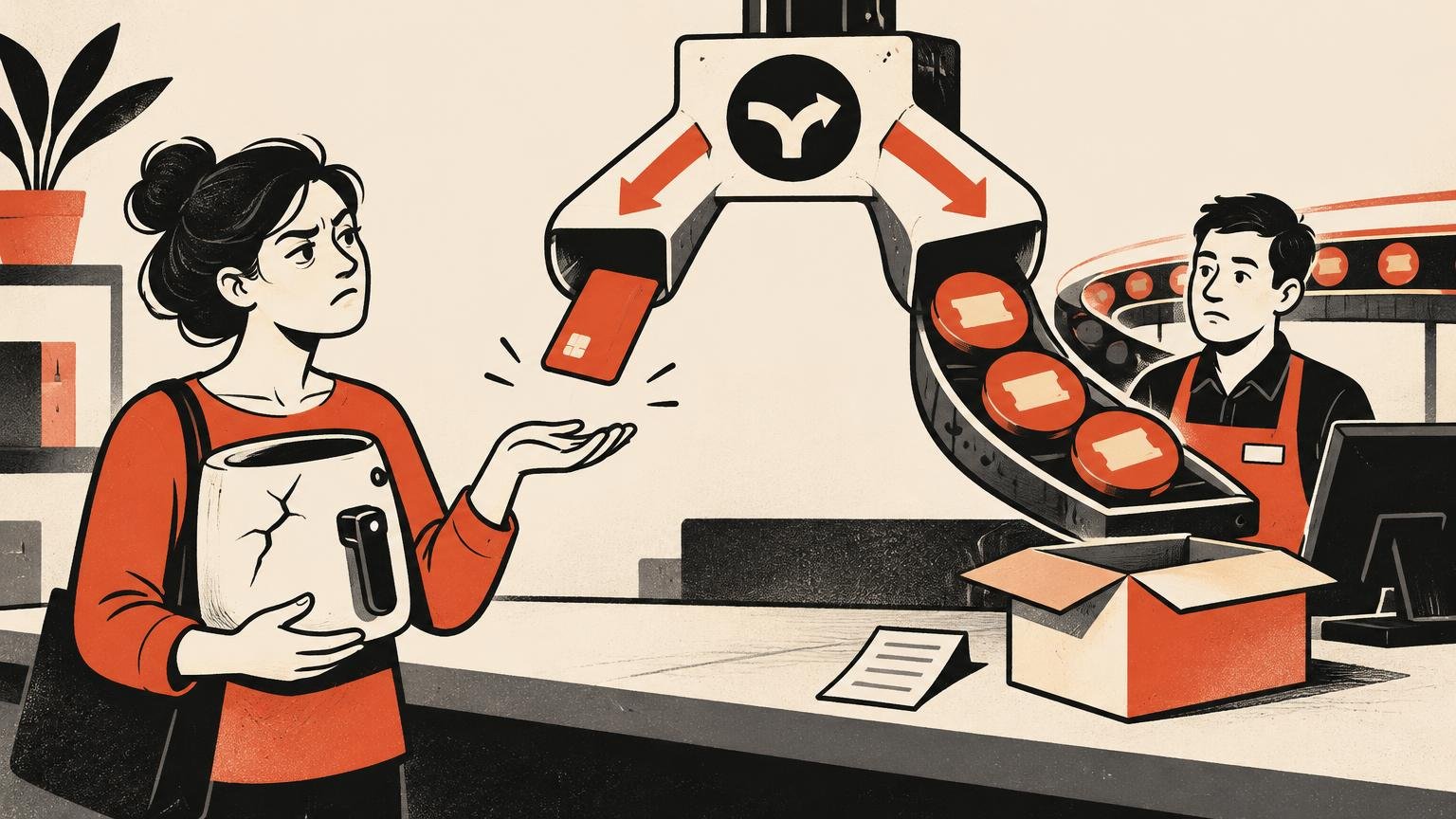
A refund versus store credit return policy can look decisive until you ask the most important question: Why is the purchase being returned? A customer who changed their mind is not in the same position as someone who received the wrong product, never received the order, or found an unauthorized charge.
For a voluntary return, the retailer’s disclosed terms may determine whether you receive money back, store credit, an exchange, or nothing. But a posted policy is not a magic shield against every other obligation. Defects, misdescription, nondelivery, and payment disputes can trigger different rules depending on the facts, payment method, state, and country.
Start with the reason for the return
Do not begin by arguing about the refund method. First put the problem into the right category. That determines which documents, deadlines, and escalation routes matter.
Hypothetical 1: You simply changed your mind
A jacket fits, matches its description, and arrived on time, but you no longer want it. This is a voluntary change-of-mind return. The retailer’s disclosed window, condition requirements, receipt rules, exclusions, and refund method are likely to be central. If the applicable policy clearly promised store credit only, demanding cash back may not get far unless state law or another specific protection changes the result.
Hypothetical 2: The product is faulty or misdescribed
An advertised new appliance arrives used, or a product lacks a feature that the listing expressly promised. That is not merely buyer’s remorse. Preserve the listing and describe the mismatch precisely. If condition terminology caused the problem, compare the seller’s representations with the distinctions explained in our guide to refurbished, open-box, and used products. Avoid turning disappointment into a broader accusation you cannot prove; identify the exact statement, defect, or missing feature.
Hypothetical 3: The order never arrived
Nondelivery is not an ordinary return because there may be nothing to return. FTC guidance says that when a seller cannot ship a mail, internet, or telephone order as promised and the customer does not consent to a delay, the customer may cancel for a full refund. The FTC’s guidance on undelivered and unordered goods explains this distinction.
Hypothetical 4: The charge itself is wrong
A duplicate charge, incorrect amount, or charge for an unaccepted delivery may involve a credit-card billing dispute rather than the retailer’s change-of-mind policy. An unauthorized bank-account or debit-card transaction is another category again. Do not let customer service repackage a disputed transaction as a request for store credit.
How to read a refund versus store credit return policy
Find the terms that applied when you placed the order. A current policy page may have changed since then, so save any dated order confirmation, checkout terms, product listing, promotional offer, and policy copy available from the purchase date.
Check each of these details:
- When the return window starts: purchase date, shipment date, delivery date, or gift receipt date.
- Whether the item was marked final sale, custom, perishable, digital, opened, clearance, or otherwise excluded.
- What condition is required, including packaging, tags, accessories, serial numbers, or signs of use.
- Whether the customer must pay return shipping, a restocking fee, or another deduction.
- Whether the policy promises a refund to the original payment method, store credit, exchange, or a choice.
- Whether receiptless returns receive different treatment or require identification.
- Whether a marketplace, third-party seller, or manufacturer handles the request instead of the platform displaying the listing.
Read the product page and order terms together. A broad returns page may say “easy returns” while a product-specific notice imposes a narrower rule. Conversely, a customer-service agent should not invent a store-credit restriction that does not appear in the applicable terms. Ask the agent to identify the exact provision being used.
A posted policy is not the whole answer
U.S. return rights are not governed by one universal rule requiring every retailer to accept unwanted goods. State disclosure rules can matter. California, for example, requires retailers with certain restrictive return policies to display key limitations conspicuously, including when the remedy is an exchange or store credit rather than a cash refund. California’s return-policy disclosure guide provides the state-specific details.
That example should not be treated as nationwide law. Identify the state connected to the transaction and consult its consumer-protection agency. A policy may help answer a voluntary-return question without resolving whether goods were defective, materially misdescribed, or never delivered.
The country matters too. EU rules differ materially from the U.S. approach: qualifying distance and off-premises purchases generally carry a 14-day withdrawal period, subject to exceptions, and nonconforming goods receive separate legal protections. Do not import an EU deadline into a U.S. dispute—or assume a U.S. store policy controls a purchase governed elsewhere.
Payment method changes your escalation route
An unauthorized electronic transfer from a bank account follows a different process. Report it to the financial institution promptly; the timing of the report can affect the investigation and potential liability. A card issuer’s investigation is not the same thing as a retailer approving a return, and filing a dispute does not guarantee a refund.
Build a record before escalating
A clean paper trail beats an angry phone call. FTC consumer guidance recommends collecting receipts, contracts, warranties, invoices, and communications before seeking a resolution. Its business-problem guide also outlines a practical escalation approach.
- Save the order confirmation, receipt, listing, dated policy, checkout terms, and promised delivery date.
- Photograph the product, packaging, shipping label, damage, serial number, and any mismatch with the listing.
- Identify the seller and merchant of record. On a marketplace, these may not be the same business.
- Send a dated written request stating what happened and the remedy you want. Use specific language such as “refund to the original payment method,” not simply “make this right.”
- Ask for the policy provision supporting any refusal, fee, or store-credit-only decision.
- Record case numbers, agent names, dates, tracking information, and promised response times.
- If the seller does not resolve the issue, consider the marketplace process, payment issuer, state consumer agency, or another channel appropriate to the transaction.
Keep the request factual. “The listing promised 256 GB, but the delivered device shows 128 GB” is useful. “This company scams everyone” is not. Precision makes the requested remedy easier to evaluate and keeps the dispute tied to evidence.
The five questions that decide your next move
Before accepting store credit—or rejecting it—answer five questions: Why are you returning the purchase? Who actually sold it? Which terms applied on the order date? What does the relevant jurisdiction provide? How did you pay?
If this is an ordinary change of mind, a clearly disclosed store-credit policy may be the deal you accepted. If the product was faulty, materially different from its description, undelivered, billed incorrectly, or charged without authorization, stop treating the matter as a routine return. Document the actual problem, request the remedy that fits it, and protect any payment-dispute deadline while the retailer responds.
Frequently Asked Questions
Can a retailer offer store credit instead of a refund?
For a voluntary change-of-mind return, the disclosed terms may limit the remedy to store credit. Different rules may apply if the item was defective, misdescribed, undelivered, or billed incorrectly.
What if an online order never arrived?
If a seller cannot ship a mail, internet, or telephone order as promised and you do not agree to a delay, FTC guidance says you may cancel for a full refund.
How long do I have to dispute a credit-card billing error?
Written notice generally must reach the card issuer within 60 days after it sent the statement containing the charge. Contacting the seller first is recommended, but keep the deadline in view.
What evidence should I save for a return dispute?
Keep the receipt, order confirmation, dated return policy, product listing, checkout terms, photos, shipping records, warranties, invoices, and communications with the seller.
Do return rights differ by location?
Yes. State and national rules vary. California has specific disclosure requirements for certain restrictive return policies, while qualifying EU distance and off-premises purchases generally have a 14-day withdrawal period subject to exceptions.
References
- What To Do if You’re Billed for Things You Never Got, or You Get Unordered Products | Consumer Advice
- Display of Return Policy by Retail Sellers: Legal Guide S-6 – California Department of Consumer Affairs
- Guarantees on goods bought in the EU – Your Europe
- How can I get a refund on a product or service I purchased with my credit card? | Consumer Financial Protection Bureau
- How do I get my money back after I discover an unauthorized transaction or money missing from my bank account? | Consumer Financial Protection Bureau
- Solving Problems With a Business: Returns, Refunds, and Other Resolutions | Consumer Advice