
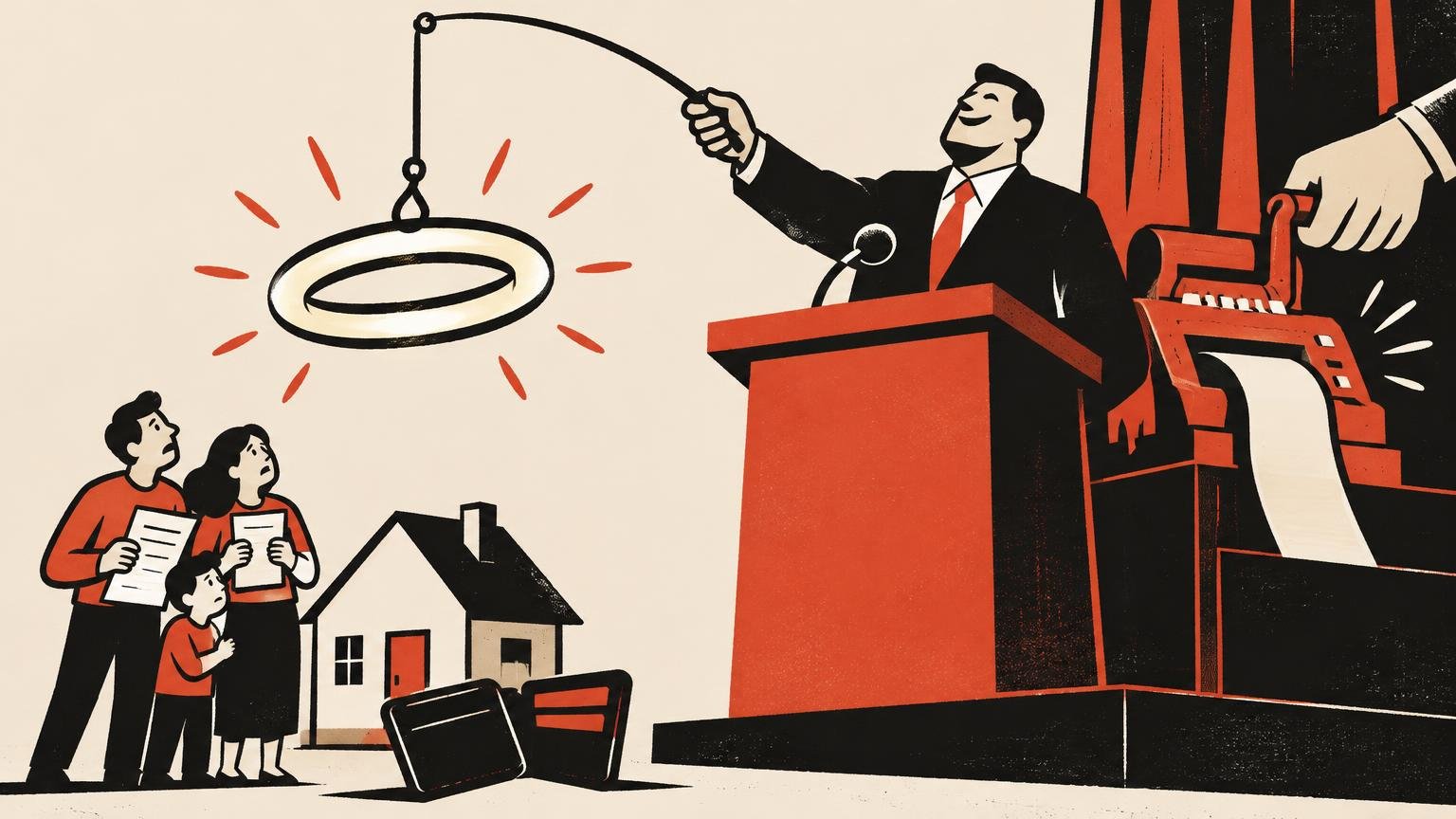
Tim Tebow should be ashamed of his Life Surge involvement. A reputation built on Christian virtue became a reassuring face for an operation whose customers have described draining retirement savings and borrowing against their homes. The man with the wholesome smile helped make the room feel safe. Some of the people who trusted that room are still describing the financial wreckage.
In our judgment, that makes him morally complicit in the exploitation those customers describe. He helped supply the trust. He does not get to treat the consequences as an unfortunate plumbing problem in a completely different department.
Little old grannies should not need a forensic accountant and a hostage negotiator to survive an afternoon of Christian inspiration. A familiar Christian celebrity onstage ought to mean somebody has exercised judgment beyond locating the microphone. When the reassurance comes from Tebow, the obligation is his, too.
And when the bills arrive, saying you were there to share your faith is a pitifully small umbrella for a man who helped lend the whole enterprise its holy glow.
The halo was part of the sales pitch
Life Surge says Tebow’s compensation was not tied to course sales and that it did not ask him to endorse its educational programs. It declines to disclose individual speaker contract terms. Those are the company’s statements, reproduced in Pablo Torre’s investigation.
Fine. A flat speaking fee does not make the speaker’s credibility commercially irrelevant. Advertising does not suddenly become charity because the celebrity gets paid by the appearance instead of by the sale.
Tebow’s presence mattered because people trusted him. A stranger promising financial transformation has to overcome suspicion. Put that stranger in a room warmed by worship and familiar Christian faces, and suspicion has to elbow its way past fellowship, admiration and the feeling that everyone is on the same side.
That is why the distinction between “selling courses” and “appearing at the event” is so conveniently bloodless. The celebrity supplies reassurance; somebody else handles the paperwork. Apparently responsibility is supposed to evaporate somewhere between the applause and the credit application.
There is also more here than a smiling face on a poster. Salon’s account of the Mother Jones investigation describes a recording from a 2023 event in which Tebow encouraged attendees who had signed up for classes to follow through. That was encouragement directed at the next step in the business, not merely an inspirational speech floating harmlessly above it.
Tebow need not have explained a single trading strategy for his words to help. He was the reassuring hand on the audience’s shoulder. That hand carries responsibility even if another hand takes the payment.
Retirement savings are not confetti for a motivational show
The money at stake makes the celebrity excuse especially nauseating.
The Roys Report interviewed Don Speer and Cassie Cox, who attended a Life Surge event and subsequently enrolled in financial education programs. Speer said he withdrew more than $60,000 from his 401(k) to cover the costs. He thought the trading course might have been worthwhile on its own, but described the real-estate training as worthless. The couple described severe financial and marital strain.
That same investigation interviewed two women, one retired, who said they were struggling with a $30,000 loan taken out for a program. The retiree described religious pressure that cast doubts about buying as Satan’s interference. The report also included customers who said the training had benefited them.
Consider the ugliness of the sales pressure that retiree described. A customer’s protective instinct starts working, and the objection gets dressed up as a spiritual failure. The little voice saying I cannot afford this is treated as the enemy. What a splendid arrangement for whoever wants the sale: even hesitation becomes something to overcome for God.
The sales conduct described in that account deserves the ordinary, furious word scam. Using someone’s faith to bulldoze their financial judgment is disgusting. Slap a cross on the cash register and it is still a cash register.
The home-equity accounts are just as sickening. Reporting on Mother Jones’s investigation describes Cathy Luebke and her husband buying a $20,000 package, borrowing roughly $40,000 on credit cards and eventually turning to a home-equity loan after they said their trading made no money. Moneywise recounts that progression. Karen Neal likewise described borrowing against her house and ending up with roughly a $15,000 mistake even after a partial refund, according to BlackSportsOnline’s coverage.
A home is where people sleep, raise children and hope to grow old without panic. Treating its equity as fuel for an expensive wealth-building adventure should make any responsible promoter recoil. Imagine looking at a family’s years of mortgage payments and seeing purchasing power for another course. That is the moral sewer these accounts ask us to examine.
For a celebrity, an event can be another date on the calendar. For a customer, the financial aftermath can follow them into every grocery trip, every retirement calculation and every conversation about whether they can afford to stop working.
That is the scale of the disgrace. The people onstage get applause. The people who say they were misled get arithmetic they cannot escape.
His team had already been asked the obvious questions
On September 25, 2026, Tebow announced a pause in his Life Surge relationship while his team investigated. He described himself as “caught off guard with some of it.” The Roys Report’s subsequent account makes that response much harder to swallow.
The outlet says it contacted his team on July 29, 2025, with questions about customers reporting financial distress and spiritual pressure. His social team directed the reporter to a PR address. The reporter sent the questions there and received no substantive response. According to the outlet, Life Surge’s representatives later confirmed that Tebow’s team had alerted them to the inquiry.
That establishes a warning reaching his team, not proof of what Tebow personally read. It also turns the innocent-surprise routine into a very serious management failure at best.
Did the people protecting his reputation forget to protect the people trusting it? Were the questions passed along, filed away or treated as an inconvenience? Was anybody assigned to determine whether the customers’ accounts were true, or did the concern stop at making sure the organizers knew a reporter was asking?
Those are questions his team should be able to answer without a yearlong expedition to locate the ancient lost city of Email.
If Tebow remained unaware, that ignorance deserves condemnation. A man trading on extraordinary public trust should have extraordinary curiosity about the business borrowing it. If he understood the alleged pressure and continued anyway, the moral failure would be worse. His personal knowledge remains unresolved; neither possibility makes indifference to the warning acceptable.
We examined the vetting issue separately in Tim Tebow Lent Life Surge His Credibility. Where Was the Due Diligence? Here, the point is more basic: being incurious about foreseeable harm is a disgraceful defense for somebody whose public identity revolves around caring for vulnerable people.
Life Surge would like you to worry about Tim
Life Surge disputes the allegations. In its October 2 statement, it says its policies forbid religious pressure and unaffordable-debt pressure, financing decisions involve independent lenders, and participation is voluntary. It cites favorable reviews, says fewer than 3% of ticket buyers enter advanced training and promises to address individual failures.
Those answers deserve to be recorded. They also deserve scrutiny. A written policy does not resolve a customer’s account of what happened across a sales table. A favorable review does not repay somebody else’s loan. And “only a small percentage bought it” is a remarkably unimpressive response when the disputed purchase can consume a substantial chunk of a household’s security.
Then there is the company’s concern for its celebrity. Its statement about Tebow asks that his character and service not become “collateral damage.”
What a touching priority. Bring out the velvet stretcher for the wounded reputation. Somewhere beyond the stage lights, customers are describing retirement withdrawals and debt secured against their houses, but let us first make certain the famous man’s halo has not suffered a scratch.
Tebow’s good work does not disappear because this relationship deserves criticism. It also does not function as a prepaid indulgence, redeemable whenever an endorsement or speaking engagement goes sour. Helping vulnerable people in one setting increases the obligation to take their vulnerability seriously in another.
If Christian character is a reason to trust his presence, Christian character is fair ground on which to judge that presence. He cannot advertise the moral significance of his reputation and then demand that everyone treat it as an irrelevant stage accessory when the questions become uncomfortable.
A pause does not put money back
A pause is a calendar decision. Making amends requires something harder.
Tebow should disclose what he was paid, what vetting occurred, who received the warnings and what his investigation found. He should explain his recorded encouragement to people who had enrolled in classes. And he should put returning his Life Surge compensation and helping affected customers on the table, rather than treating reputation management as the finish line.
Our verdict: If you lend your Christian credibility to a business, you owe the people who trusted it more than a graceful exit when the complaints become embarrassing. Show the scrutiny you performed. Explain the warnings your team received. Put your own money behind making things right.
Nobody should mock these customers for wanting security or believing they were among people who shared their values. The contempt belongs with the alleged pressure tactics and with the wealthy, influential people whose credibility helped make the operation reassuring.
Tebow was not a helpless decoration that accidentally fell off a Christmas tree and landed on the Life Surge stage. He was a public figure with a valuable reputation and the ability to ask questions. The responsibility followed him onto that stage and followed him off it.
He should be ashamed. More importantly, he should make that shame useful. A halo cannot pay a home-equity loan. If his public faith means more than branding, the people who trusted him deserve to see what he is prepared to give up for them.
Frequently Asked Questions
Why criticize Tebow if he did not personally sell the courses?
His name, appearances and encouragement carried credibility. This article argues that he bears moral responsibility for how that credibility was used. It does not establish that he knowingly participated in fraud.
Did customers report losing retirement savings or borrowing against their homes?
Yes. The reporting linked above describes a withdrawal of more than $60,000 from a 401(k), credit-card borrowing and home-equity debt. Those accounts do not establish that the named customers lost their houses to foreclosure.
What do Tebow and Life Surge say?
Tebow announced a pause and an investigation in September 2026. Life Surge disputes the characterization of its practices, says its policies prohibit religious and unaffordable-debt pressure, and says speaker compensation is not tied to course sales.
References
- What to know about Life Surge, Joe Johnson and the Inquirer’s investigation
- Life Surge sparks concern among some Christians | Business
- What Are the Allegations Against Tim Tebow and Life Surge?
- Tim Tebow’s Kingdom Impact – PABLO TORRE FINDS OUT
- Tim Tebow pauses relationship with Christian organization accused of using predatory sales tactics – The Washington Post
- A Statement from Life Surge